East Azerbaijan Hajj and Pilgrimage News
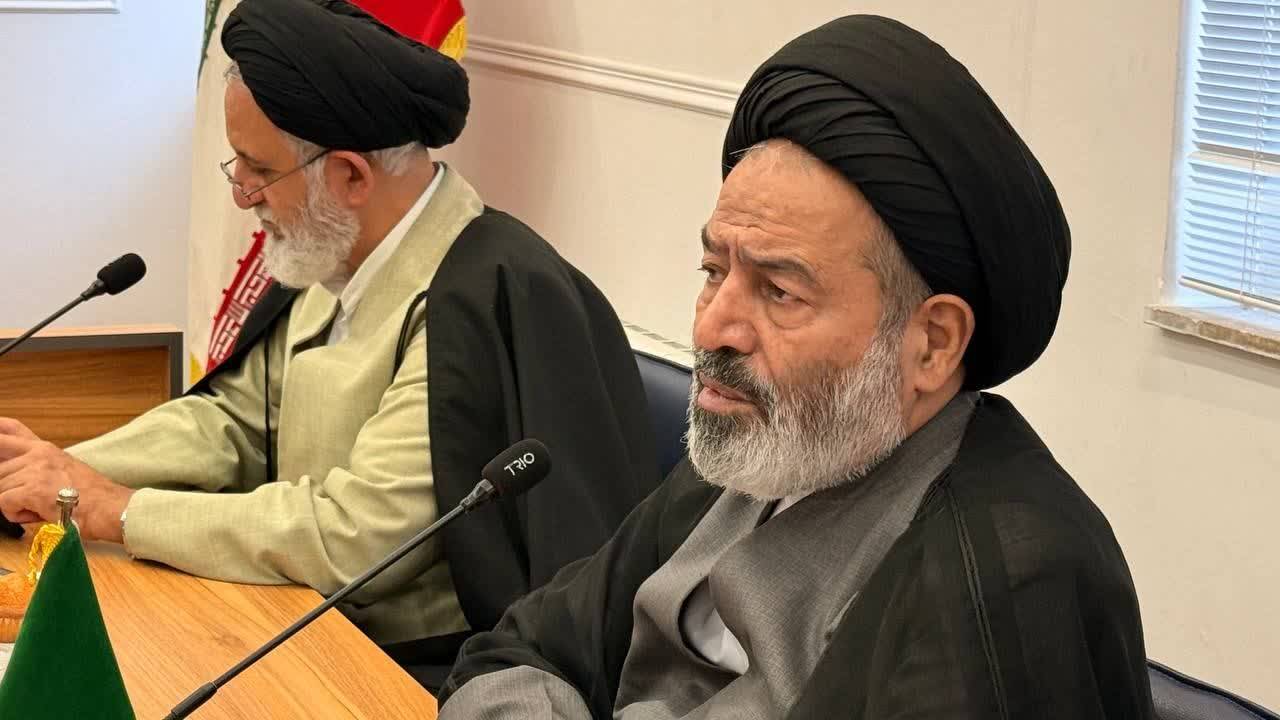
During a meeting with cultural servants and Hajj clergy in Tabriz, Hojjat al-Islam Seyyed Abdolfattah Navab, the Supreme Leader's representative for Hajj and Pilgrimage affairs, described serving the pilgrims of the House of God as a valuable blessing and a unique opportunity for cultural service. He emphasised the necessity of cherishing this opportunity and striving to provide exemplary service to the pilgrims.
Citing a narration from Imam Sadiq (AS) — "Good character attracts affection, and one who understands their time will not be overwhelmed by confusion" — he stated that good temperament fosters love and that those who are aware of the demands of their era are better equipped to navigate complex situations. He urged the clergy to adopt a kind and people-oriented approach, noting that a caravan cleric should act as a practical role model for the pilgrims through their behaviour and kindness.
Referring to the Prophet of Islam (PBUH) as the ultimate model of good character, he cited verse 159 of Surah Al-Imran: "So by mercy from Allah, you were lenient with them. And if you had been rude and harsh in heart, they would have disbanded from about you. So pardon them and ask forgiveness for them and consult them in the matter. And when you have decided, then rely upon Allah. Indeed, Allah loves those who rely [upon Him]."
Navab further stressed that a cleric must be "aware of their time," possessing both religious knowledge and an understanding of contemporary conditions and the needs of the people to effectively guide and serve the pilgrims.
Reflecting on the success of the late leader, Navab attributed his achievements to the principles mentioned in the narration of Imam Sadiq (AS): good character and situational awareness. He also highlighted the late leader's high level of sincerity, his ability to act decisively, and his focus on institution-building, noting that both domestic and international religious institutions were established and developed during his tenure. He also pointed to the late leader's management of his office and the upbringing of his children as further examples of his leadership.
Navab outlined several components of the late leader's governance, including a constant emphasis on political independence, the preservation of national sovereignty, the strengthening of defensive deterrence, the development of scientific and technological capacities, and efforts to solidify the structure of the Islamic Republic of Iran. He also noted the late leader's support for the resistance front, his international engagement, and his opposition to various American conspiracies.
Regarding defensive deterrence, Navab stated that with the late leader's support, the country achieved self-sufficiency in military and defence sectors. He contrasted this with the past, when the country lacked domestic production of even basic defensive equipment, asserting that the nation has now reached extensive capabilities. He concluded by highlighting the late leader's role in advancing scientific progress in fields such as medicine, aerospace, and nanotechnology, as well as his efforts to manage national crises to ensure the continuity of the Islamic Republic's structure.