East Azerbaijan Hajj and Pilgrimage News Agency
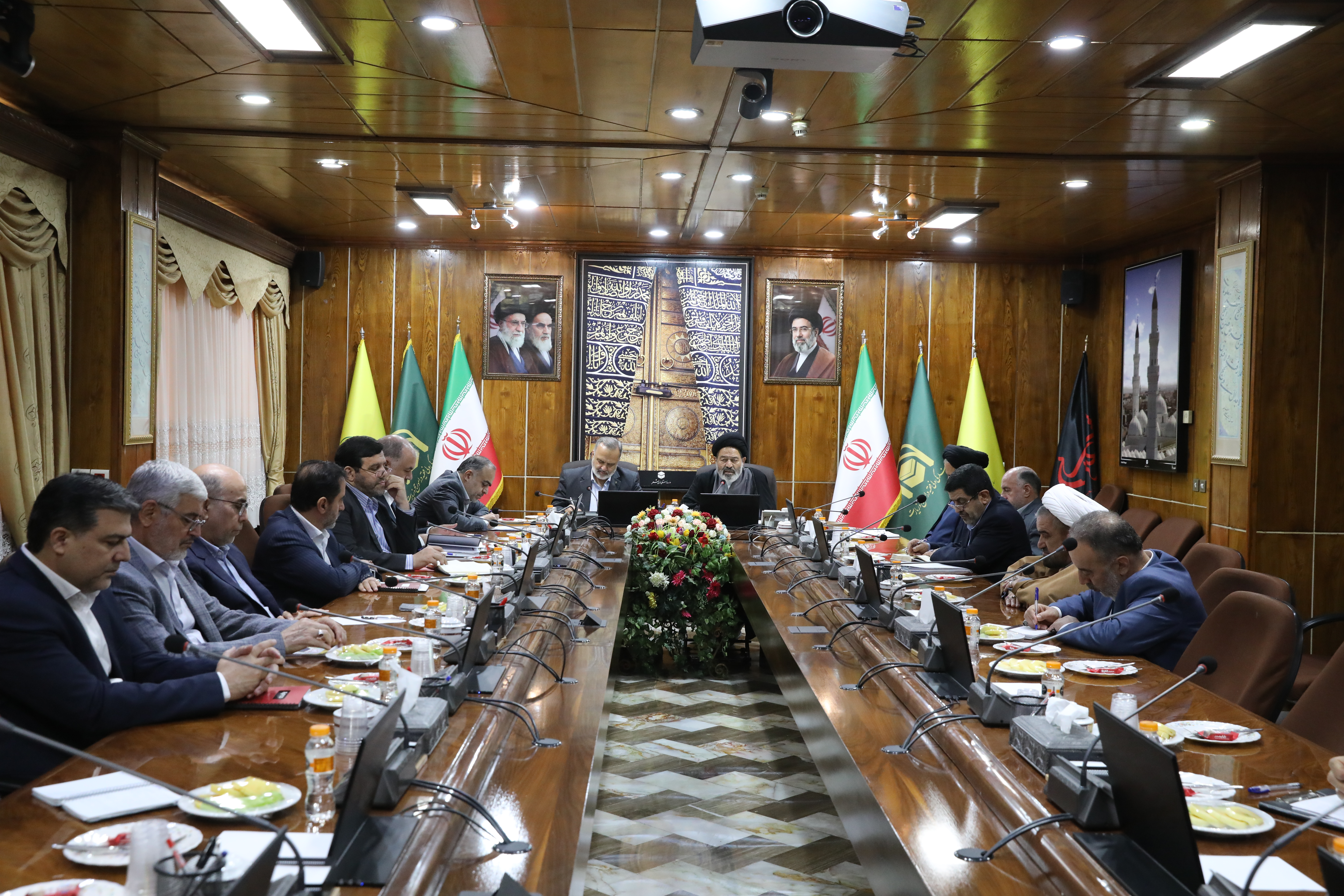
During a meeting of the Supreme Leader's Hajj and Pilgrimage Office and the Hajj and Pilgrimage Organisation, officials discussed strategies to manage foreign currency requirements while maintaining the quality of services for pilgrims.
At a meeting of the Planning and Coordination Council of the Supreme Leader's Hajj and Pilgrimage Office and the Hajj and Pilgrimage Organisation, chaired by Hojjat al-Islam Seyyed Abdolfattah Navab, the representative of the Supreme Leader in Hajj and Pilgrimage affairs, it was emphasised that while maintaining the dignity and honour of pilgrims and the quality of services provided, appropriate measures for foreign currency savings must be pursued in light of the country's current economic conditions.
During the session, the Deputy for Development and Resource Management of the Hajj and Pilgrimage Organisation reported on topics discussed at the recent meeting of the Standing Commission of the Supreme Council of Hajj and Pilgrimage, which was attended by representatives from 12 relevant agencies, and outlined 11 proposed resolutions. Hamid Reza Mohammadi, referring to the resolutions regarding the allocation of foreign currency for Hajj, Umrah, and Atabat operations, highlighted the importance of preserving the value of deposits made by Hajj and Umrah applicants. The Supreme Leader's representative in Hajj and Pilgrimage affairs stressed that the Hajj and Pilgrimage sector has remained mindful of the country's foreign currency situation regarding Umrah and Atabat dispatches, noting that last year's Hajj was conducted with 30,000 pilgrims, while approximately 55,000 others who were unable to travel still have outstanding claims.
In the same meeting, the Deputy for Hajj and Umrah of the Hajj and Pilgrimage Organisation pointed to operational preparations for the upcoming Hajj. The head of the Hajj and Pilgrimage Organisation, Ali Reza Rashidian, stated that the necessary preparations regarding accommodation, transport, catering, and the deployment of medical and health teams for Umrah operations are in place, and that the airline has submitted flight schedules to the host country. Mr Rashidian added that until these flight schedules are approved, it is practically impossible to register and dispatch pilgrims, expressing hope that the host country will issue the flight permits so that Iranian Umrah pilgrims may proceed.
Mohammad Javad Daneshyar, head of the Omreh Saadat Institute, reported on his recent trip to Saudi Arabia and the signing of new contracts, stating that the comfort of pilgrims has always been a priority in dispatch arrangements.
At the conclusion of the meeting, the head of the Hajj and Pilgrimage Medical Centre noted that medical examinations for 10,353 individuals—approximately 15 per cent of the applicants for the upcoming Hajj—are still pending, and urged them to visit their designated physicians promptly. Dr Seyyed Ali Marashi added that, based on examinations conducted thus far, 219 people have been disqualified from the upcoming Hajj, most of whom suffered from advanced cardiovascular conditions.