
South Khorasan Hajj and Pilgrimage officials discuss strategies to enhance regional travel services
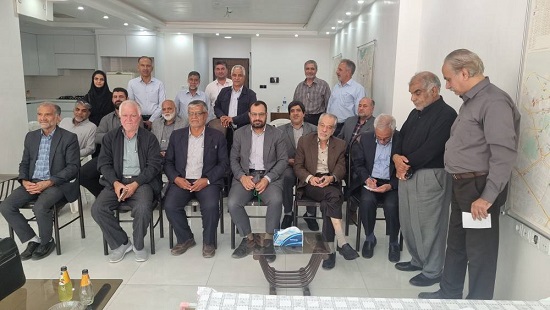
The South Khorasan Hajj and Pilgrimage Department held a meeting with provincial travel agency directors to discuss service expansion, operational coordination, and the regulation of pilgrimage activities.
According to the South Khorasan Hajj and Pilgrimage public relations office, a meeting of the provincial Central Company of Pilgrimage Agents was held, attended by the Director of Hajj and Pilgrimage for South Khorasan, the CEO and board members of the Central Company, and directors of provincial pilgrimage offices. The session began with a tribute to the 2,400 martyrs of South Khorasan, as well as deceased pilgrims and service providers.
Hossein Dastgerdi, Director of Hajj and Pilgrimage for South Khorasan, commended the efforts of provincial agency directors. He specifically highlighted the managers of Birjand-based offices for their contributions over 200 nights to the Seyyed al-Shohada of the Revolution procession. He also extended his gratitude to managers in Ferdows, Qaen, Sarayan, Tabas, and other districts for their ongoing service to pilgrims.
Dastgerdi emphasised the need for greater cohesion among pilgrimage offices, urging managers to use creativity and existing resources to improve service delivery. Noting that 1,300 people from the province were dispatched to the Atabat-e-Aliat in September, he encouraged the design of diverse pilgrimage packages tailored to public needs and invited managers to submit new proposals.
A key focus of the meeting was the formation of a working group dedicated to activating Atabat-e-Aliat capacity. Dastgerdi explained that this group aims to build relationships with executive bodies, industrial complexes, and rural communities to expand pilgrimage travel. He noted that while offices are encouraged to identify local opportunities, all service arrangements must remain within the regulatory framework of the provincial Hajj and Pilgrimage office.
Addressing the issue of unauthorised operators, Dastgerdi stated that judicial rulings have already been issued in two cases, and legal action against non-compliant activities will continue. However, he stressed that enforcement is only one part of the strategy, which must also include improving service quality and marketing to ensure the public chooses authorised agencies.
Finally, Dastgerdi urged agencies to increase their presence on social media and digital platforms to promote their services. He offered the support of the provincial management in publicising agency news through official channels and recommended that all offices establish dedicated communication channels, preferably on the Bale messenger app, to keep the public informed about Atabat-e-Aliat, Umrah, and other pilgrimage services. He also encouraged the use of physical advertising, such as banners and posters, to increase visibility.